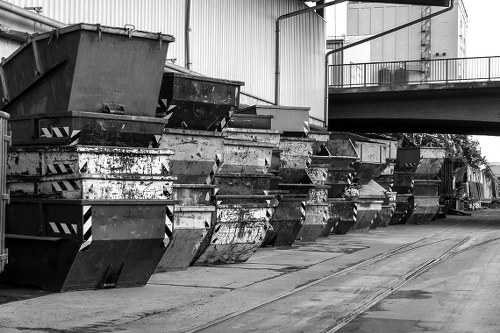
Health & Safety Policy — Skip Hire Chigwell
This Health and Safety Policy sets out the commitment of Skip Hire Chigwell to protect employees, contractors, clients and the public while delivering professional skip hire and rubbish removal services. It reflects our duty to maintain safe operations across our service area and to meet statutory obligations for waste handling, transport and disposal. This policy applies to all on-site and off-site activities associated with skip hire and waste management.Scope and Objectives
Our objectives are to prevent accidents and work-related ill health, to minimise environmental harm, and to ensure that all skip hire services and associated activities are carried out in a controlled, safe manner. The policy covers planning, vehicle movements, loading and unloading of containers, segregation of waste streams, storage of hazardous materials and the use of plant and mobile equipment. It also applies to customer sites where we provide temporary waste storage solutions.
Key Responsibilities
Management is responsible for ensuring that adequate resources are allocated to health and safety, that risk assessments are conducted and reviewed, and that this policy is communicated and enforced. Employees and contractors must follow safe systems of work, wear appropriate personal protective equipment, and report hazards without delay. Supervisors must ensure that training is completed and that safe working procedures for vehicle loading, manual handling and site access are adhered to.Risk assessment is at the core of our safety approach. All activities are subject to documented assessments which identify hazards, evaluate risks and establish control measures. Typical risks addressed include manual handling injuries during loading and unloading of skips, collapsing or unstable loads, exposure to hazardous substances, road transport incidents during collection and delivery, and contact with sharps or biological waste. Control measures include safe lifting techniques, mechanical aids, load containment, segregation protocols and vehicle safety checks.
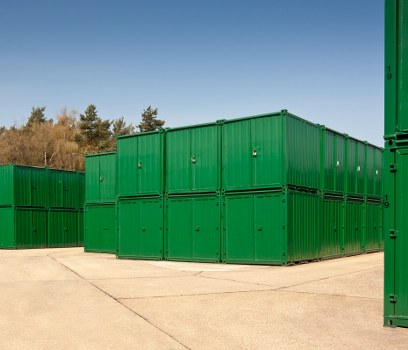 Training and competence are essential. We provide induction and ongoing training for drivers, loaders and site operatives covering safe movement of skips, vehicle reversing procedures, use of PPE, handling of controlled waste and emergency response actions. Training records are maintained for all staff and refresher training is provided regularly. Competent personnel are required to supervise activities involving heavy plant and hazardous materials, and a clear chain of responsibility is established for each job.
To support safe operations we maintain written procedures for loading, securing and transporting skips, including load-weight limits and containment measures for loose or hazardous waste. Our fleet is inspected routinely and drivers are briefed on routes, customer site conditions and parking constraints. We implement a permit-to-work regime for high-risk activities and ensure that electrical, mechanical and fire risks are assessed and controlled prior to work commencement.
Environmental controls and waste segregation are integrated into our health and safety management. We require correct classification and packaging of hazardous materials, clear labelling, and separation of recyclable and non-recyclable streams to reduce on-site handling risks. Spill kits and containment equipment are provided where hazardous liquids may be present, and procedures for reporting and cleaning spills are enforced.
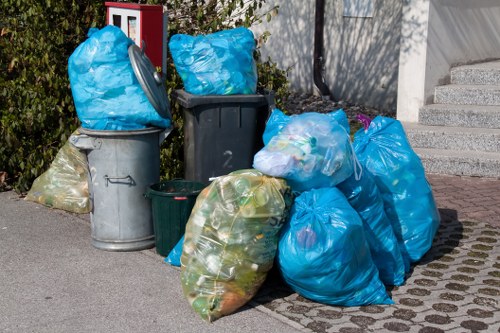 Accident reporting, investigation and corrective action are mandatory. All incidents, near misses and unsafe conditions must be reported promptly. Investigations seek root causes and result in corrective actions to prevent recurrence. Lessons learned are shared with staff via briefings and documented updates to procedures. We liaise with relevant authorities when required and maintain records in line with legal requirements.
Monitoring, Review and Continuous Improvement
This policy is reviewed at least annually and following any significant incident, change in legislation, or alteration in our operations. We monitor performance through audits, inspections and analysis of incident trends. Key elements include:- Regular site and vehicle inspections to ensure compliance with safety standards.
- Performance metrics such as near-miss frequency and time lost due to injury.
- Scheduled maintenance and testing of lifting equipment and vehicle safety systems.